Daniel de Roulet's new novel traces a lifetime of Swiss dissent through three boys
In «Trois Garçons», the Swiss writer folds his own life into a panorama of postwar Switzerland's social struggles, according to Le Temps.
Le Temps describes «Trois Garçons» as both a manifesto of subversion and a disguised autobiography, continuing a literary and political project that Daniel de Roulet has pursued across his work: the ambition to improve the world through writing.
The novel can be read as a panorama of social and political struggles in Switzerland since the end of the Second World War, with didactic detours into the country's history, according to the newspaper. It is also, Le Temps notes, an autobiography of the author split across three characters.
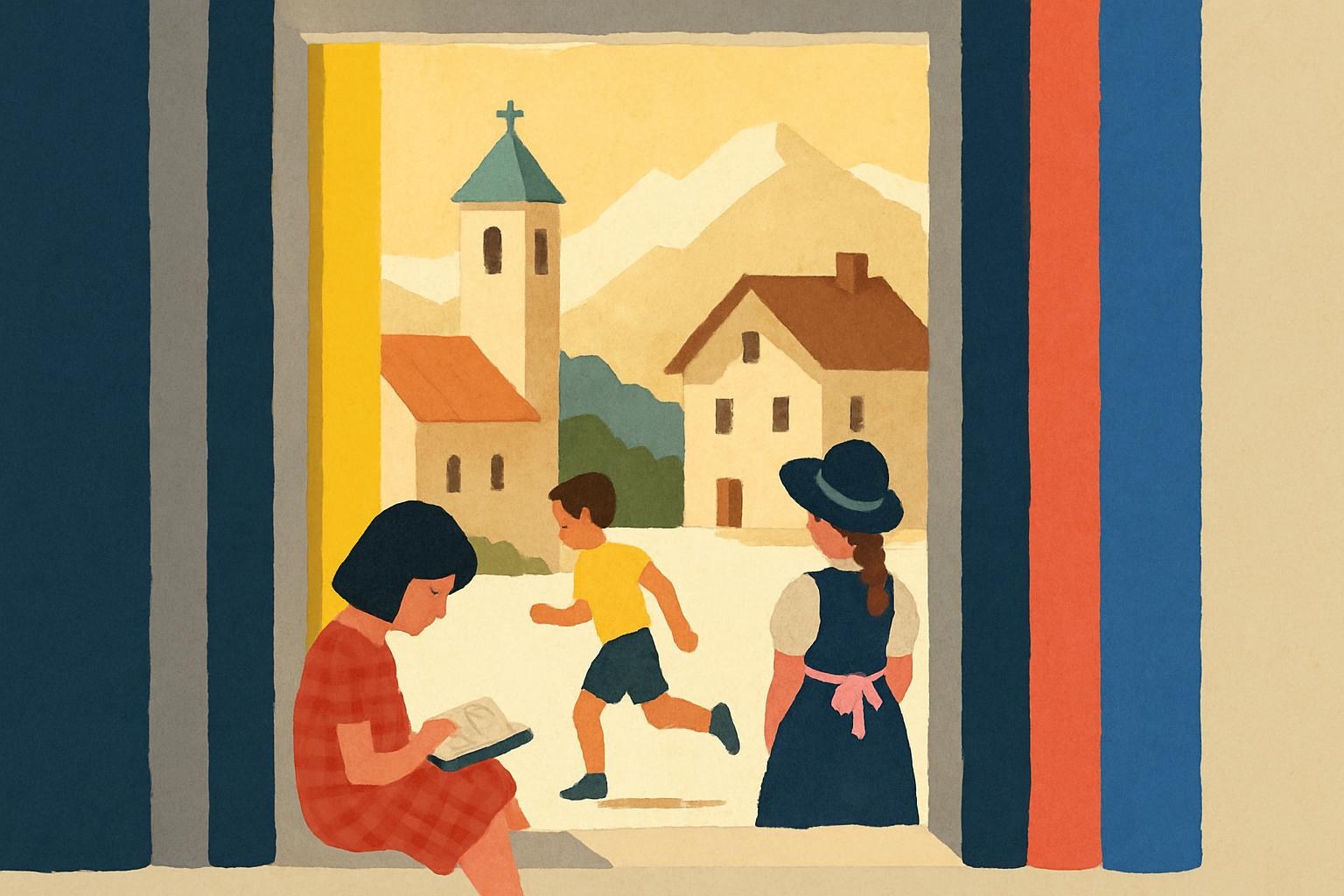
Max, Fabio and Wolfgang are born in 1943 in Davos, nicknamed «le Patelin», a year before Daniel de Roulet himself. Max is the son of the hotelier; his family speaks French and English and attends the Protestant temple on Sundays. Fabio's father is the hotel's concierge, his Swiss-German inflected with an Italian accent, while his grandmother goes to Mass. Wolfgang's father, a municipal employee, votes secretly for the Parti du travail.
The three boys attend the same public school and become inseparable friends despite differences of class, origin and belief, a bond that Le Temps says endures into the present day within the novel. But they gradually become aware of their unequal privileges: during holidays, one goes to the seaside at his grandparents' property, another milks a cow on a farm in Italy, and the third weeds the garden in Davos.
Sources
This article was written from these reports.